With over 1.6 million adults in the UK using weight loss injections or pills, they have become one of the fastest growing weight-loss trends. The latest of these medications, the Wegovy pill, is still relatively new, and it affects different metabolic pathways in the body, so we can’t be sure about long-term risks and new side effects. So, what are the true risks of weight loss jabs or pills, and what are the alternatives for those who prefer a more traditional approach?
Our nutritionist, Mark Gilbert, explains the risks and benefits.
What are weight loss injections and pills and how do they work?
GLP-1 medications such as Wegovy, Mounjaro and Ozempic were first developed to manage type 2 diabetes by controlling blood sugar levels. In 2014, they were approved for obesity management, and 2021 marked a turning point when Wegovy became the first GLP-1 specifically indicated for weight loss.
In 2026, a new daily Wegovy tablet was launched in the UK, making the medication more accessible to those who are put off by thought of injections.
These drugs mimic hormones naturally produced in the gut, which regulate appetite, digestion and blood sugar. They slow gastric emptying and signal fullness to the brain. Injections are typically administered in the abdomen, thigh or upper arm, either weekly or daily depending on the medication, and the pill must be taken daily.
Initially prescribed to people with type 2 diabetes or those with a BMI of over 35 (or 30 with related health conditions), GLP-1s have gained popularity in recent years. Social media and celebrity endorsements have fuelled demand, but it’s important to weigh the pros and cons before considering this weight loss avenue.
What's the difference between weight loss injections vs pills?
The Wegovy weight loss pill, introduced in July 2026, offers an alternative way to take the medication. It contains the same active ingredient, semaglutide, as the Wegovy injection and works through the same biological mechanisms to reduce appetite and increase feelings of fullness. As a result, users can expect similar benefits, side effects and challenges.
The key difference lies in how the medication is taken. Instead of a weekly injection, the pill is taken once a day. However, it must be taken at least eight hours after eating, meaning users will need to fast beforehand. It should also be taken with no more than 120ml of plain water, after which users must wait at least 30 minutes before eating, drinking or taking any other medication.
Unlike injections that go straight into your blood stream, the weight loss pill is absorbed in the gut, meaning the dosage must be much higher due to limited absorption.
Are injections or pills better for weight loss?
Clinical trials have shown that the Wegovy pill is effective at reducing appetite and supporting weight loss. Those on the 25mg Wegovy pill lost an average of 13.6% of their starting body weight over 64 weeks, compared to the 7.2mg injection, that saw an average loss of 18.7% of starting weight over 72 weeks. While they have been no direct studies comparing the two, this is a good indicator.
The injectable form has been evaluated over a longer period, with studies lasting 72 weeks compared with 64 weeks for the pill, meaning there is currently a larger body of clinical evidence supporting its long-term use.
The benefits of weight loss injections or pills
Before diving into the risks of weight loss medications, it’s worth looking at the benefits of both the pill and the injection:
-
Appetite control: GLP-1s reduce hunger, helping users eat less without feeling deprived.
-
Reduced risk of type 2 diabetes: Managing obesity lowers the chance of developing type 2 diabetes.
-
Better metabolic health: Studies show improvements in blood pressure and cholesterol levels.
However, a structured diet plan for weight loss can provide similar benefits without the uncertainty of medication.
The risks and negative impact of weight loss injections or pills
From side effects and long-term complications to unlicensed sellers and high costs, the risks of weight loss medications are significant.
Side effects and health risks of GLP-1s
According to the U.S. Food and Drug Administration, the most common side effects include nausea, vomiting, heartburn and diarrhoea. These usually resolve within one to two months. More serious effects can include acute pancreatitis, fever, organ failure, hair loss, kidney stones, arthritis, vitamin deficiencies and muscle loss.
Some users experiment with risky techniques, such as microdosing without a doctor’s consent or purchasing from unlicensed sellers, increasing both danger and cost.
Cost and accessibility
For those eligible for an NHS prescription, cost may not be a major concern. However, private treatments can exceed £3,000 per year, making the ongoing expense of weight loss medications a significant factor to consider. Affording this high monthly cost will depend on your personal circumstances.
Accessibility can also be an issue. Availability may be affected by demand, supply chain challenges and past price fluctuations – for example, private Mounjaro prescriptions saw a 170% increase in 2025.
Health insurance is another consideration. Because the long-term risks are still unclear, some private insurers are restricting or removing coverage for these medications, which could further impact affordability.
Long-term sustainability and weight regain
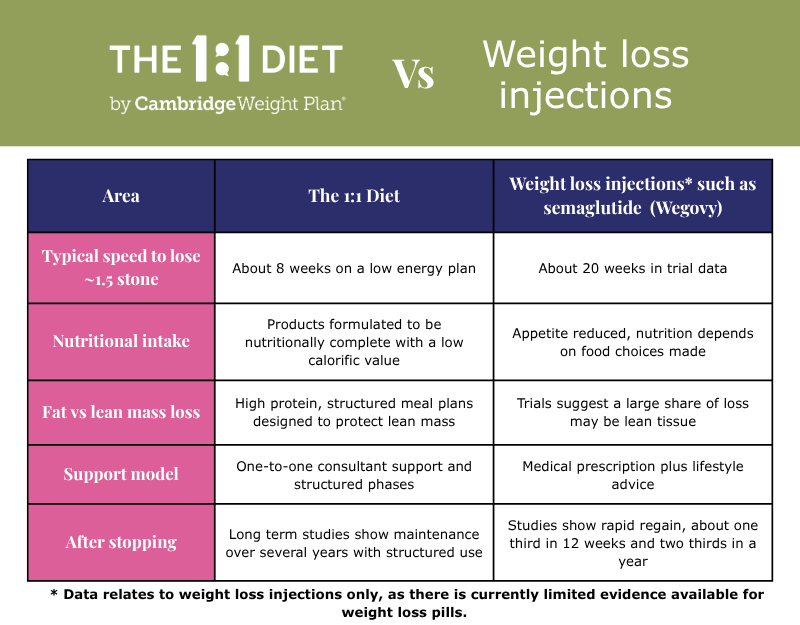
Weight loss medications can be effective in the short term, but studies suggest that maintenance after stopping is difficult. One study found that a third of weight lost at 68 weeks was regained within 12 weeks, and two-thirds within a year.
Another found that around 40% of weight loss with Wegovy is lean tissue, not fat. Research from Oxford suggests people regain weight faster after stopping injections than after conventional dieting.
Reduced food intake can also lead to nutritional deficiencies, fatigue and muscle loss, raising concerns about the long-term sustainability of these medications.
How a structured diet is a better weight loss plan
For those seeking alternatives to weight loss medications, The 1:1 Diet is a structured, evidence-based plan that helps people lose weight safely and sustainably.
With a step-based approach, the programme focuses on low-calorie meals that are nutritionally complete, providing essential vitamins and minerals. Combined with one-to-one support from trained Consultants, it helps participants establish healthy eating habits and maintain weight loss.
If you’re looking for diets that actually work for weight loss, The 1:1 Diet offers a proven alternative to injections or pills.
Key benefits of The 1:1 Diet compared to weight loss jabs
Weight loss medications suppress appetite and can produce weight loss over several months, but they don’t teach your body how to eat for long-term health. Hunger often returns once the medication stops, and weight is typically regained faster than with structured dieting.
By contrast, The 1:1 Diet combines nutritionally complete meal plans with personalised support. It ensures adequate vitamins, minerals and protein, helping preserve lean mass while encouraging sustainable habits.
Below, we have provided a side-by-side comparison of our diet and weight loss injections. With weight loss pills being relatively new, there is currently little research available, but many experts believe similar results will be found as the pills work through the same biological mechanisms as the jabs.
Ditch the weight loss medications... Start your weight loss journey with The 1:1 Diet today
A structured plan like The 1:1 Diet offers proven, sustainable results without the associated costs and risks with weight loss injections.